
Transportation to Overlook Medical Center
Wheelchair van and stretcher transportation to and from Overlook Medical Center in Summit — discharge rides home, transfers to rehabilitation, and the months of neurology follow-ups and therapy visits that come after a stroke.
Call (973) 389-3110Getting To and From Overlook Medical Center
Overlook Medical Center is Atlantic Health System's hospital in Summit, in northern Union County, and it is best known across New Jersey for one thing: neuroscience. As home to the Atlantic Neuroscience Institute and a comprehensive stroke program, Overlook draws stroke and neurology patients from well beyond Summit itself — which means a steady stream of families suddenly facing a very specific transportation problem. A parent or spouse who drove themselves everywhere two weeks ago now cannot sit up unassisted, cannot manage a car door, or cannot safely handle the front steps of their own house.
That is the gap Delta Medical Transportation fills. We are a licensed non-emergency medical transport company based in Totowa, and Overlook is one of the hospitals we serve most often. We bring patients in for scheduled admissions and outpatient procedures, take discharged patients home or on to rehabilitation, and run the recurring appointment rides — neurology follow-ups, imaging, outpatient therapy — that stroke recovery demands for months afterward. To be clear about what we are and are not: we are an independent transport company, not part of Atlantic Health System, and we provide scheduled, non-emergency ground transport only. If someone is showing stroke symptoms right now, call 911 — minutes matter, and that trip belongs to an emergency ambulance, not to us.
For everything after the emergency is over, though — the discharge, the rehab transfer, the long tail of follow-up visits — a scheduled transport company with the right equipment is safer, calmer, and far more practical than trying to fold a recovering patient into the family sedan. Call (973) 389-3110 and we will set the trip up in one phone call.
The Trips We Run at Overlook
Three kinds of rides make up most of our Overlook work.
Discharges Home
The most common booking: a patient cleared to leave Overlook who cannot ride in a regular car. Our crew meets the patient at the hospital, secures them in a wheelchair van or on a stretcher, and takes them to their front door — and through it, up the stairs if needed, to wherever they will be recovering.
Transfers to Rehab
Stroke and neurosurgery patients often leave Overlook for acute inpatient rehabilitation rather than home — frequently to a Kessler Institute for Rehabilitation campus or another rehab facility in the region. We coordinate the handoff timing with both the discharging unit and the receiving facility.
Recurring Follow-Ups
Neurology follow-ups, imaging, and outpatient therapy visits continue for months after discharge. Families set up a standing schedule with us once, and the same reliable ride shows up for every appointment — no re-booking, no scrambling for a driver each week.
Stroke Recovery Is a Transportation Problem, Too
Because Overlook's stroke program pulls patients from across the region, a large share of the rides we run here follow the same arc. It starts with the transfer out: after the acute phase, many stroke survivors are discharged not to home but to acute inpatient rehabilitation, where daily physical, occupational, and speech therapy does the heavy lifting of recovery. That first leg — Overlook to the rehab facility — is almost never a trip a family can do themselves. The patient may have one-sided weakness, poor trunk control, or a new wheelchair they have used for exactly one day. Our crews handle that transfer routinely: we confirm the discharge time with the floor, bring the right vehicle for the patient's condition, and deliver them to the receiving facility's intake without the family having to lift anyone.
Weeks later comes the second leg: rehab to home. By then the patient has usually regained some mobility but is nowhere near done. And that is when the least visible but longest phase begins — months of outpatient appointments. Neurology follow-ups at Overlook. Repeat imaging. Outpatient therapy two or three times a week. Each of those is a round trip, and for a working family, being the driver for every single one is simply not sustainable. This is where scheduled, recurring medical transport earns its keep: one phone call sets the standing schedule, and the rides happen — on time, with a crew that knows how to load and secure a wheelchair, every visit. We wrote in more depth about how families manage this in our guide to stroke patient transportation in NJ.
From Stretcher to Wheelchair: Transport That Matches Recovery
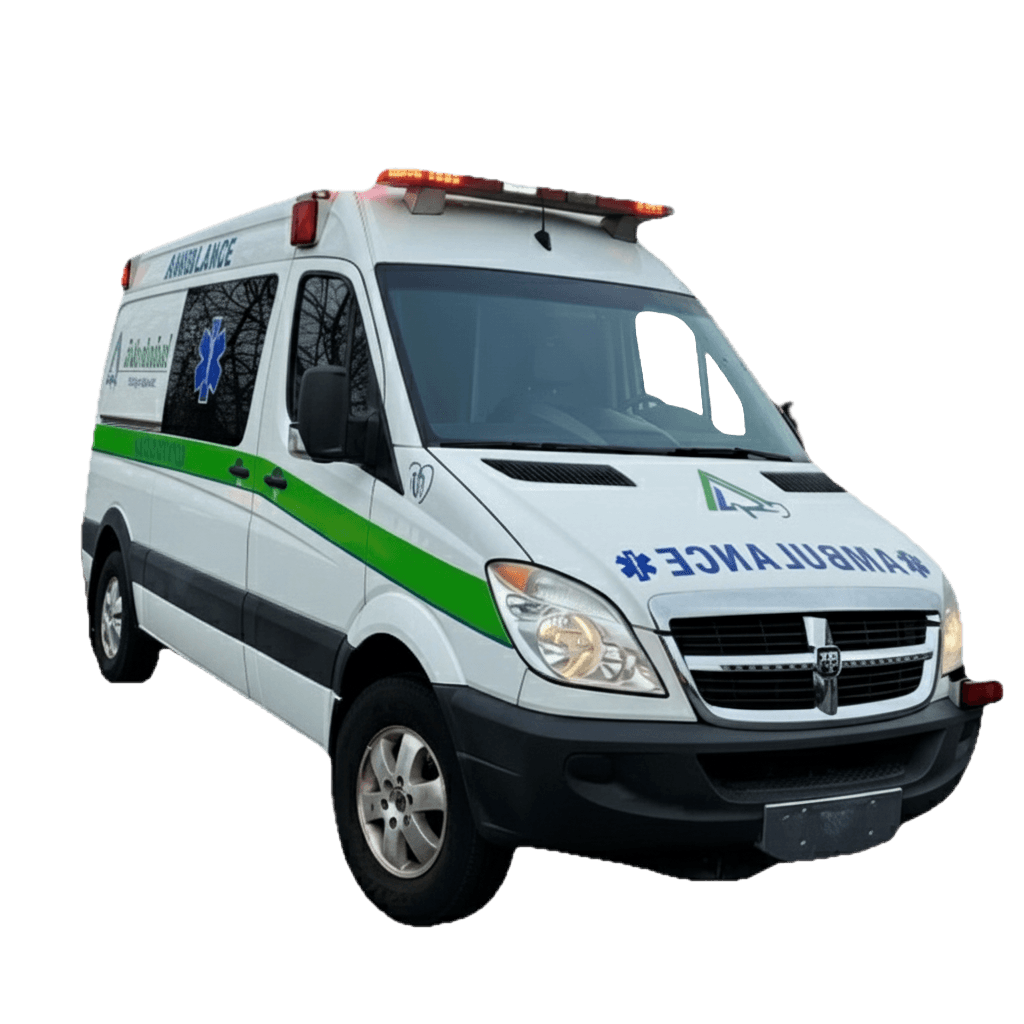
Post-stroke mobility is a moving target, and the vehicle should match where the patient is today, not where they were last month. Early on, a patient who cannot yet sit upright for a sustained ride travels by stretcher — our stretcher and non-emergency ambulance service uses licensed BLS vehicles with EMT-trained two-person crews, oxygen capability on board, and bariatric-rated equipment when needed. As trunk control and endurance return, most patients step down to a wheelchair van — faster to board, less clinical, and less expensive. Because Delta operates both, families are not forced to switch companies mid-recovery; the dispatcher simply books the level of transport the patient needs for that stage. Tell us how the patient transfers today, and we will send the right vehicle.
Summit's Hills, Old Houses, and the Stairs Problem
There is a local detail that matters more for Overlook trips than for most hospitals: the terrain. Summit sits on high ground — the name is not a coincidence — and the residential streets around it, in town and in the surrounding boroughs, are full of older homes built long before anyone thought about wheelchair access. Sloped driveways, front porches reached by six or eight steps, narrow interior staircases: for a patient coming home from a stroke unit, the last thirty feet of the trip is often the hardest part.
This is why we ask about the home when you book, not just the addresses. Our crews assist patients up and down stairs and through tight entryways as part of the trip — door to door means through the door, not to the curb. If the patient travels by stretcher, the two-person crew manages the carry; if by wheelchair, we plan the safest path in before we arrive. Families are often surprised that this is included in how we quote and staff a trip, but around Summit it is frequently the difference between a transport that works and one that ends with a family member improvising on a staircase.
Where Overlook Patients Ride From
Overlook's draw follows its specialties. For routine care its patients come mostly from Union County — from Summit itself and neighboring towns like Westfield, Cranford, Union, and Elizabeth. But the neuroscience and stroke programs reach much further: we regularly carry patients to and from Overlook from Morris County towns such as Madison and Morristown, and from Essex and Somerset county communities as well. Because Delta serves all of New Jersey from our Totowa base, the patient's address is never the obstacle — if the appointment is at Overlook, we will get them there.
The reverse trips matter too. Community hospitals and skilled nursing facilities around the region send patients to Overlook for neurological consultations and procedures that their own campuses do not offer. Facility staff arranging those trips can call us directly to set up an account and a standing booking process — one phone call to (973) 389-3110 establishes the relationship, and after that, booking a resident's trip takes minutes.
How Discharge Day Works
Hospital discharges rarely run on schedule, and we plan for that. The best move is to call us as soon as the care team starts talking about a discharge date — even before the exact time is confirmed. We reserve a vehicle and crew for that day, then adjust the precise pickup time as the paperwork, final assessments, and physician sign-off come together. If the floor runs late, our dispatch stays in contact and shifts the pickup rather than leaving the patient waiting in a lobby, and we maintain same-day availability for planned discharges when the call comes with less notice.
Families can make the booking, but so can the professionals managing the discharge — case managers, social workers, and discharge planners coordinate with our dispatch directly to confirm the patient's mobility needs, equipment, and destination details. Our full hospital discharge transport service page covers the process in detail. On cost: every quote is free and all-in, priced from the distance, the vehicle level the patient needs, stairs, and any oxygen or bariatric requirements — call with the specifics and we will price the trip in a few minutes.
Frequently Asked Questions
Do you provide transportation to Overlook Medical Center in Summit?
Yes. Delta Medical Transportation provides scheduled, non-emergency wheelchair van and stretcher transportation to and from Overlook Medical Center from anywhere in New Jersey. We handle hospital discharges going home, transfers to rehabilitation facilities, and recurring rides to outpatient appointments at the hospital and its surrounding medical offices. Delta is an independent transport company — we are not affiliated with Overlook or Atlantic Health System.
Can you transport a patient from Overlook to a rehab facility like Kessler?
Yes. Hospital-to-rehab transfers are one of the most common trips we run from Overlook, especially for stroke patients moving on to acute inpatient rehabilitation. We coordinate the pickup time with the hospital's discharge team and deliver the patient to the receiving facility's admissions intake — by wheelchair van if they can sit upright, or by stretcher if they need to travel lying flat.
My family member had a stroke and cannot sit upright. Can you still transport them?
Yes. Delta is a licensed Basic Life Support (BLS) provider, and our stretcher-equipped vehicles with EMT-trained two-person crews are built for exactly this situation. Patients who cannot yet hold themselves upright after a stroke travel lying flat and secured, with oxygen available on board if their care plan calls for it. As recovery progresses, many families move from stretcher trips to wheelchair van trips with the same company.
Can you set up recurring rides for neurology follow-ups and therapy?
Yes, and we recommend it. Stroke recovery usually means months of repeat visits — neurology follow-ups, imaging, and outpatient physical, occupational, and speech therapy. Rather than booking each ride one at a time, call us once and we will put the whole recurring schedule on our calendar so the same reliable transport shows up for every appointment.
Do your crews help with stairs at the home?
Yes. Our crews assist patients from inside the home to the vehicle and back — including stairs, porches, and narrow entryways. This matters a great deal around Summit and the surrounding towns, where many older homes have front steps and no ramp. Tell us about the stairs when you book so we send the right crew and equipment.
How much does transport to or from Overlook Medical Center cost?
It depends on the trip: the distance, whether the patient needs a wheelchair van or a stretcher vehicle, stairs at the pickup or drop-off, any oxygen or bariatric requirements, and the day and time. Rather than guessing from a rate table, call (973) 389-3110 with the pickup address and the patient's mobility needs and we will give you a free, all-in quote in a few minutes.
Is this an emergency ambulance service?
No. Delta provides scheduled, non-emergency ground transportation only. If someone is showing signs of a stroke right now — face drooping, arm weakness, slurred speech — or having any other medical emergency, call 911 immediately. Our service is for medically stable patients who need a safe, planned ride: discharges, transfers, and appointments.
Which towns do you serve for Overlook Medical Center trips?
All of New Jersey. Most of our Overlook trips come from Union County — Summit itself, Westfield, Cranford, Union, and Elizabeth — plus nearby Morris County towns like Madison and Morristown, and parts of Essex and Somerset counties. Wherever the patient lives, we handle the ride to Summit and back.
Get an Estimate & Request a Ride
Enter your addresses to calculate your estimate
Calculate Your Estimate
Ready to Schedule Your Ride?
Book your appointment today and experience professional, compassionate medical transportation