
Surgery Center Transportation in New Jersey
Your surgery center won't discharge you after sedation without a safe ride — and without one, procedures get canceled the morning of. Delta books both legs in one call: on-time drop-off at check-in, an on-call pickup when recovery clears you, and door-through-door help at home.
No Ride Home, No Procedure: The Rule That Cancels NJ Surgeries
It usually happens at the pre-op phone call, sometimes at check-in itself: the nurse asks who is taking you home, and if the answer is "I'll drive myself" or "I'll figure it out," the procedure is at risk. New Jersey ambulatory surgery centers verify a discharge plan before they administer sedation, and patients who show up without one are routinely rescheduled on the spot — losing the surgical slot, the time off work, the fasting from midnight, and sometimes weeks of waiting for the next opening.
The rule isn't bureaucracy. Anesthesia and sedation — including the "twilight" sedation used for colonoscopies and endoscopies — impair judgment, coordination, and reaction time for up to 24 hours, even when you feel completely normal in the recovery room. That is why facilities won't let a sedated patient drive, and why most require discharge into the care of a responsible adult rather than simply pointing you toward the parking lot. The center is accountable for you until there is a safe handoff, so they insist on knowing exactly who is on the other end of it.
For plenty of patients that handoff is easy — a spouse or adult child drives them. The problem is everyone else: seniors whose family works during the day, people whose only local contact is also their caregiver, patients scheduled for a 6:30 a.m. check-in an hour from home, and anyone whose ride fell through the night before. That is the gap Delta fills. We are a scheduled medical transport company based in Totowa, serving surgery centers and hospital surgical suites across New Jersey, and getting sedated patients home safely is exactly the kind of trip we exist for. If a hospital keeps you longer than planned and releases you after hours, our guide for when you are discharged at night with no ride home covers who to call and what the case manager can and cannot do.
If your procedure is still weeks away, start with our step-by-step patient guide to pre-op and post-op transportation in New Jersey — it walks through pre-admission testing trips, the 24-hour anesthesia rule, and what to arrange before surgery day. This page covers the service itself: how the rides work, what the center needs from your transport provider, and how to book.
Why "I'll Just Take an Uber" Often Doesn't Work
Rideshare apps solved a lot of transportation problems. The post-surgery ride home after anesthesia is not one of them. A rideshare or taxi driver's job ends at the curb — they cannot sign for you, monitor you, walk you inside, or take any responsibility for a post-surgical passenger whose reflexes and judgment are medically impaired. Because of that, many New Jersey surgery centers will not release a sedated patient to a rideshare or taxi alone. Policies vary by facility: some allow a rideshare if a responsible adult rides with the patient, others require the escort to come inside at discharge, and some simply will not discharge to an unaccompanied hired car at all.
A medical transport provider changes what the facility is handing you off to. With Delta, the recovery nurse gets a named company with a dispatch line, a scheduled reservation the center can verify, and a trained, background-checked driver who walks you from the discharge wheelchair to the vehicle, secures you for the ride, and takes you door-through-door at home — inside the front door, not dropped at the sidewalk. That is a fundamentally different handoff than a stranger in a sedan, and it is why facilities that turn away rideshares work with providers like us every day.
One honest caveat, because it matters: whether a professional transport provider satisfies a particular center's escort policy is always the center's call. Some accept it outright; others still require a personal escort and treat us as the transportation piece of the plan. Ask your pre-op nurse exactly what your facility accepts (our guide to who can drive you home after sedation explains what a "responsible adult escort" usually means) — and if they require a family member too, that person is welcome to ride along with you in our vehicle.
Common Procedures We Provide Rides For
Almost any same-day procedure with sedation comes with a ride-home requirement. These are the trips we run most often — and what each one typically needs.
Colonoscopy & Endoscopy
Twilight sedation still counts — you cannot drive afterward, and most GI centers verify your ride before starting. Patients ride seated in a standard vehicle; the main need is a reliable on-call pickup, since endoscopy schedules shift constantly through the morning.
Cataract & Eye Surgery
One of the most common searches that brings patients to us. Cataract patients almost always ride seated and walk on their own, but leave with blurred vision in the operated eye and often a sedative on board — driving is off the table. Many need the same ride again for the second eye a few weeks later, and for the next-day follow-up exam.
Orthopedic Day Surgery
Knee scopes, shoulder repairs, foot and hand procedures. These patients often need more than a sedan: extra legroom for a leg that cannot bend, help managing crutches or a walker they received an hour ago, or a wheelchair-accessible van. Tell us the joint and we will send the right vehicle.
Oral & Dental Surgery
Wisdom-tooth extractions and implant procedures under IV sedation carry the same escort rules as any surgery center. Patients are groggy, numb, and sometimes queasy — the driver assists into the vehicle and all the way to the door at home.
Pain-Management Injections
Epidural steroid injections, nerve blocks, and ablations are quick procedures, but sedation plus temporary numbness or leg weakness means most pain clinics require a ride. These are often recurring visits, and we can set up the same driver arrangement each time.
How Surgery-Day Transport Works
The whole point is that you plan this once, before surgery, and never think about it while sedated.
1. One call books both legs
Give us your surgery date, check-in time, the center's name and phone number, and your procedure type. We schedule the morning drop-off and set up the return leg in the same call — no separate booking, no day-of scrambling.
2. Confirmation the day before
We confirm your pickup time the day before surgery. Early check-ins are normal for us — first surgical cases in NJ often check in at 6:00–7:00 a.m., and we build in a traffic buffer so a late ride never costs you your slot.
3. Drop-off at check-in, not the curb
Your driver assists you from your front door into the vehicle and delivers you to the center's check-in desk on time. If the facility asks, we provide our dispatch number so the nursing staff has a direct line to your ride home.
4. The return leg waits for you — not the other way around
Procedures run long. Recovery times vary. So the return pickup is dispatched on call: when the recovery nurses clear you for discharge, the center or your family calls our line and your driver heads out. You are never stranded in the lobby, and you never pay for hours of idle waiting.
5. Door-through-door at home
You will be groggy, possibly nauseated, possibly on crutches you got an hour ago. The driver walks you from the vehicle through your front door — up the porch steps, inside — before the trip is over. If you need help with a walker or wheelchair, say so at booking and we will be ready.
What does it cost? There's no flat statewide rate — the price of a surgery-center round trip depends on distance, the vehicle needed (sedan-level, wheelchair van, or stretcher transport for patients who cannot sit up), time of day, and any assistance requirements at either end. We quote the exact round trip by phone before you book, free, and NJ FamilyCare (Medicaid) may cover it for covered procedures with prior authorization — see our insurance & payment options.
For Surgery Centers & Schedulers
Every scheduler knows the math on a same-day cancellation: an empty OR slot, a surgeon's wasted block time, and a patient who fasted since midnight going home untreated — all because a ride fell through. A transport partner your staff can actually reach changes that. When your pre-op team identifies a patient without a discharge plan, one phone number solves it: we book both legs, your recovery nurses get our dispatch line for the day-of pickup call, and your center discharges into the hands of a named, accountable provider instead of hoping a rideshare shows up.
Setting up a working relationship is deliberately simple — no portal, no paperwork marathon. Call us, tell us your facility's typical case schedule and escort policy, and we'll establish an account so your team can refer patients or book on their behalf with a single call. We already coordinate discharges this way with facilities across New Jersey, from GI and eye centers to hospital same-day surgery units, and early-morning arrivals are a normal part of our schedule.
Reach us at (973) 389-3110 or deltamedicalnj@gmail.com to set up your facility.
Surgery Center Transportation — Frequently Asked Questions
Can I take an Uber or taxi home after anesthesia?
It depends on the facility, and this is exactly where patients get caught. Many New Jersey surgery centers will not discharge a sedated patient into a rideshare or taxi alone, because the driver cannot take responsibility for a person whose judgment and reflexes are still impaired. Policies vary — some centers accept a rideshare only if a responsible adult rides with you, others do not accept them at all. A professional medical transport provider gives the center something a rideshare cannot: a named, accountable company with a trained driver who assists you door-through-door. Confirm your center's exact policy before surgery day so there are no surprises at check-in.
Will the driver wait during my procedure? How does pickup timing work?
Procedures run long all the time, so we do not tie your ride home to a guess. When you book, we schedule the return leg around your expected discharge window and give the surgery center our dispatch number. When you are in recovery and the nurses clear you to leave, the center (or a family member) calls us and we dispatch your driver. You are never left standing at the curb, and you are not paying a driver to idle in the parking lot for four hours. For very short procedures nearby, the driver may simply stay in the area.
Does insurance cover surgery center transportation?
Sometimes. NJ FamilyCare (Medicaid) covers transportation to covered procedures when it is medically necessary and arranged with prior authorization — start that process as soon as your surgery is scheduled. Some Medicare Advantage and private plans include transportation benefits; check your plan documents or call the number on your card. Many surgery-center trips are private pay, and we quote the full round trip by phone before you book so you know the exact cost up front. See our insurance and payment page for details.
Can Delta be my "responsible adult" for discharge?
Here is the honest answer: our driver provides door-through-door assistance — into the vehicle at the center, out of the vehicle at home, and to your door — and the facility gets a named, accountable transport provider with a dispatch line they can call. Whether that satisfies a specific center's escort policy is the center's decision, and policies genuinely differ. Some accept a professional medical transport provider in place of a personal escort; others require a family member or friend regardless. We strongly recommend calling your surgery center's pre-op nurse before booking and asking exactly what they accept.
Do you do early-morning pickups? My check-in is at 6:30 a.m.
Yes. First-case surgical check-ins in New Jersey are routinely 6:00–7:00 a.m., and pre-dawn pickups are a normal part of our schedule. Book in advance, tell us your exact check-in time, and we will build in a buffer for traffic so you are not the patient who loses a surgical slot to a late ride.
Can a family member ride along?
Yes. A family member or friend is welcome to accompany you at no extra charge in most vehicles — just tell us when you book so we plan seating. Many patients bring their escort along precisely because the surgery center requires a personal escort at discharge; we handle the driving and assistance, and your escort satisfies the center's policy.
What if I can't sit comfortably after my procedure?
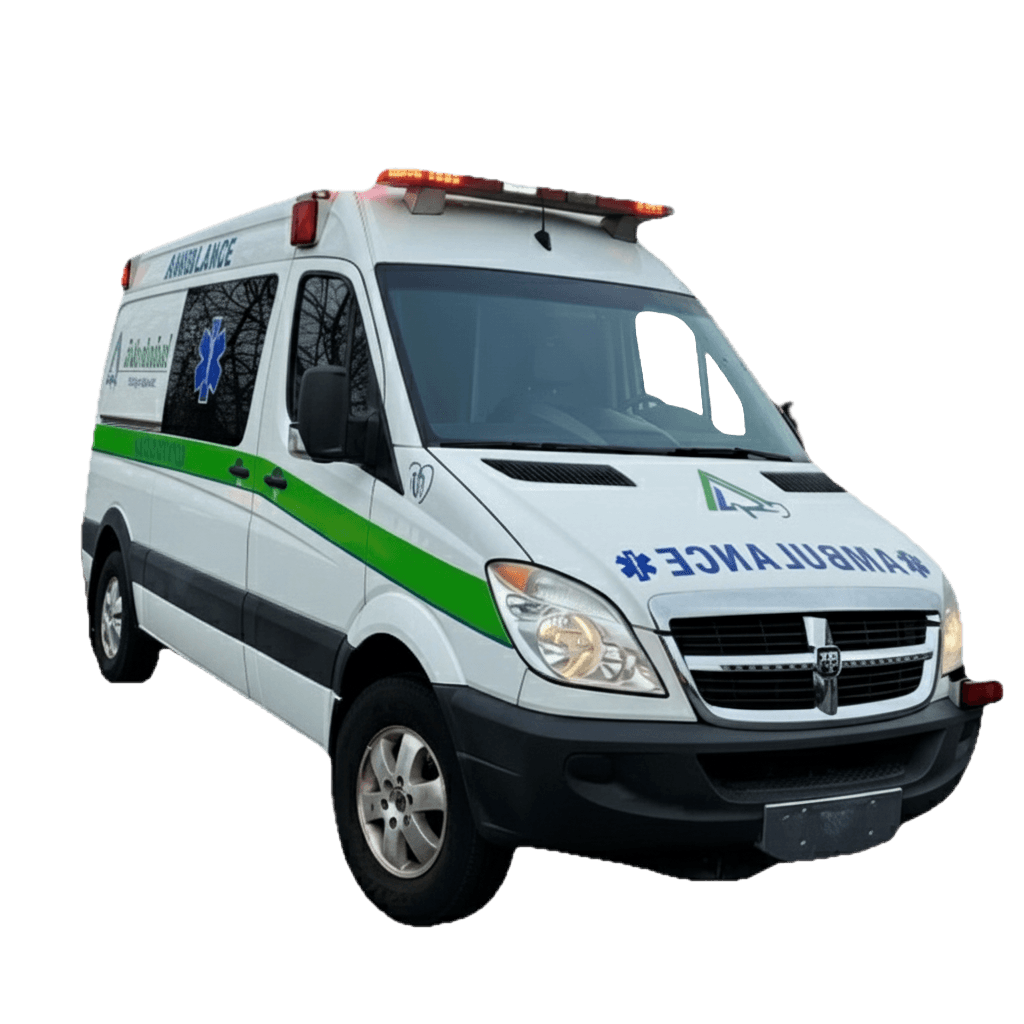
Tell us the procedure type when you book and we will match the vehicle. Most surgery-center patients ride seated in a standard vehicle. Patients leaving orthopedic day surgery sometimes need extra legroom or a wheelchair-accessible van if they cannot bend the operative joint. And if a patient truly cannot sit upright, we are a licensed BLS provider with stretcher-equipped vehicles — an option almost no rideshare or taxi alternative can offer. Confirm the expected transport level with your surgical team, then call us.
How far in advance should I book?
Book as soon as you have your surgery date — ideally at least 48 hours ahead, and earlier for 6–7 a.m. check-ins or if you need a wheelchair van. Booking both legs early protects your surgical slot; same-day requests are sometimes possible but never guaranteed. If your procedure is rescheduled, one call moves both trips at no penalty.
Planning further ahead? Read our full guide to pre-op and post-op transportation in New Jersey for pre-admission testing trips and week-before checklists.
Get an Estimate & Request a Ride
Enter your addresses to calculate your estimate
Calculate Your Estimate
Ready to Schedule Your Ride?
Book your appointment today and experience professional, compassionate medical transportation