
Transportation to Cooper University Hospital
Non-emergency wheelchair and stretcher transportation to and from Cooper University Hospital in Camden — discharges home, recurring treatment rides to MD Anderson Cancer Center at Cooper, and transfers from community hospitals across South Jersey.
Call (973) 389-3110South Jersey's Academic Medical Center — Without Crossing the Bridge
For decades, serious medical care in South Jersey often meant one thing: crossing the Ben Franklin or Walt Whitman into Philadelphia. Cooper University Hospital changed that equation. As the academic medical center anchoring Camden's medical corridor — home to South Jersey's Level 1 trauma center and MD Anderson Cancer Center at Cooper — it lets patients from Camden, Gloucester, Burlington, Salem, and Cumberland counties get university-hospital-level care on their own side of the Delaware River.
But "closer than Philadelphia" is not the same as "easy to get to." A patient recovering from surgery in Glassboro can't drive themselves to a follow-up in Camden. A grandmother in Cherry Hill doing daily radiation can't ask her daughter to take five weeks off work. A trauma patient cleared to leave Cooper for a rehab facility can't ride home in the back seat of a sedan. That gap — between needing Cooper's care and physically getting there — is exactly what Delta Medical Transportation fills.
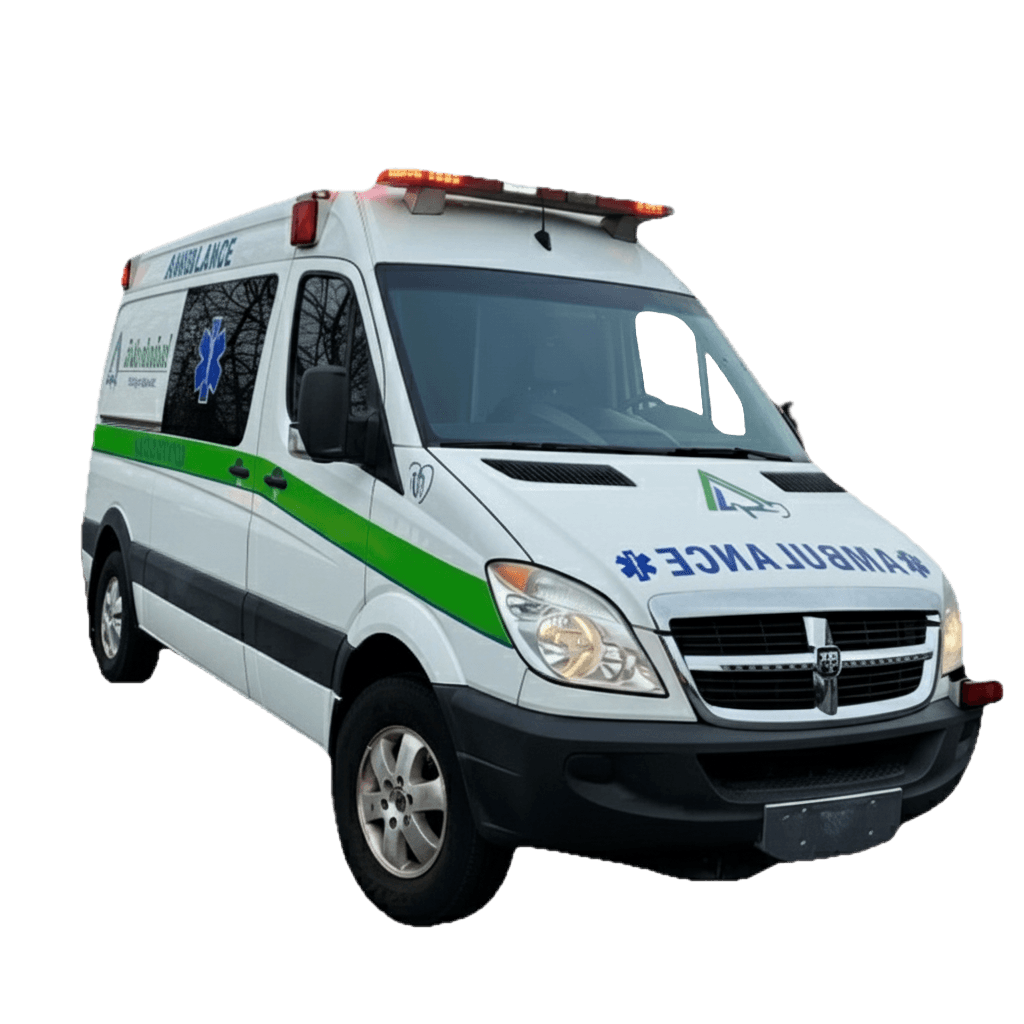
We provide scheduled, non-emergency ground transportation to and from Cooper's Camden campus: wheelchair-accessible vans for patients who can sit upright, and stretcher-equipped, licensed BLS ambulances with EMT-trained two-person crews for patients who need to travel lying flat. To be clear about what we are and aren't: we don't respond to emergencies, and trauma cases go to Cooper by 911 — our job is everything scheduled that comes before and after, from the first outpatient appointment to the discharge ride home.
Who Books Rides to Cooper — and From Where
Because Cooper draws patients from across the southern half of the state, our Cooper trips rarely start in Camden itself. The most common pattern is a pickup somewhere in the surrounding counties and a drop-off at the Camden campus — or the reverse, when a patient is discharged back home. In Camden County we regularly pick up in Cherry Hill, Voorhees, Pennsauken, and Gloucester Township. In Gloucester County, trips come from Deptford, Washington Township, Glassboro, and Woodbury. And from Burlington, Salem, and Cumberland counties, patients travel longer distances precisely because Cooper offers specialties their local hospitals don't.
Three groups book most of these rides. First, families arranging discharges: a parent or spouse is being released from Cooper and needs a wheelchair van or stretcher vehicle to get home or to a rehab facility. Second, patients in recurring treatment — oncology above all — who need the same ride two, three, or five times a week. Third, case managers and social workers at community hospitals and nursing facilities arranging a transfer into Cooper for specialty care their own facility can't provide, or a step-down transfer out of Cooper once the acute phase is over.
One more group is easy to overlook: out-of-town family. When a loved one is hospitalized at Cooper after a serious accident, relatives often fly into Philadelphia International — just across the bridge from Camden. Our PHL airport medical transport service handles that leg too, including rides for a recovering patient flying home with a medical escort arranged by the family.
Recurring Rides to MD Anderson Cancer Center at Cooper
Cancer treatment is where one-off ride booking breaks down completely. A radiation course at MD Anderson Cancer Center at Cooper typically means a visit every weekday for weeks on end. Chemotherapy and infusion schedules repeat on cycles. Add in labs, imaging, and oncologist follow-ups, and a single course of treatment can mean dozens of round trips to Camden — each one on a day when the patient may be exhausted, nauseated, or immunocompromised.
We handle this as a standing arrangement rather than a stack of individual bookings. Give us the treatment calendar and we build the ride schedule around it: consistent pickup windows, drivers who learn the patient's routine and preferences, and a dispatch team that already knows the trip when the schedule shifts — because treatment schedules always shift. Radiation running long, an infusion moved to Thursday, a week's pause for blood counts: one phone call updates the series.
For patients who can sit upright, our wheelchair vans keep the ride simple and low-stress. For patients weakened late in treatment who need to travel reclined, we move the same standing schedule onto a stretcher vehicle without starting over. Our chemotherapy transport page covers how we approach oncology rides in more detail — the short version is that consistency is the whole product, and we treat a missed treatment ride as the failure it is.
Discharges From Cooper: Trauma Recovery and the Ride That Follows
Cooper's trauma center produces a distinctive kind of discharge. Patients who arrive by 911 after car accidents, falls, and other serious injuries often leave weeks later — alive and stabilized, but nowhere near ready to fold themselves into a family car. Many can't sit upright for the length of a ride. Many are heading not home but to an inpatient rehabilitation facility for the next phase of recovery. These are exactly the trips our stretcher-equipped ambulances and EMT-trained two-person crews exist for: a flat, secured, oxygen-ready ride from Cooper's campus to the rehab facility, nursing facility, or home hospital bed that's next.
The coordination works the way it does for any hospital discharge: call us as soon as a discharge date is anticipated, even before the exact hour is set. We reserve the vehicle and crew, confirm mobility needs — wheelchair or stretcher, oxygen, bariatric equipment, stairs at the destination — and then stay flexible on the pickup time, because discharge paperwork and final assessments rarely finish on schedule. Our dispatch stays in contact with the floor so the patient isn't discharged into a lobby with no ride in sight, and for facility-to-facility moves we offer bed-to-bed service so there's no gap in hands-on care between the two buildings.
Discharge planners and case managers at Cooper-area facilities who arrange these trips regularly can call us to establish an account, so booking becomes a two-minute phone call instead of a new-customer intake every time. To be direct about our role: Delta is an independent company. We are not affiliated with or endorsed by Cooper University Health Care — we simply do this run often, in both directions, and have the process down.
Pickups in Camden Itself: Rowhomes, Walk-Ups, and City Logistics
Not every Cooper patient comes from the suburbs. Plenty of our trips start a few minutes from the hospital, in Camden itself — and city pickups have their own logistics. Rowhome blocks with narrow streets and no driveways. Walk-up apartments with no elevator. Front stoops with a full flight of steps between the door and the sidewalk. A wheelchair van with a hydraulic lift is only half the answer if the patient can't get from the second floor to the curb.
Our crews plan for this. We ask about stairs, doorways, and parking when you book, and we bring stair chair equipment when the pickup requires it, with a two-person crew doing the carrying — never a driver improvising alone. Door-through-door means exactly that: from inside the home, down whatever stands in the way, into the vehicle, and to the correct entrance at Cooper's campus, not just the nearest curb on a large urban medical block.
What a Ride to Cooper Costs
Pricing depends on a handful of concrete factors: the vehicle (a wheelchair van costs less than a stretcher ambulance with a two-person crew), the mileage from your pickup point to Camden, the level of assistance involved — stair chair work, bariatric equipment, oxygen — and whether you need the crew to wait during an appointment and bring the patient back. A short wheelchair-van hop within Camden County and a stretcher transfer from Cumberland County are very different trips, and they're priced like it.
Wheelchair-van trips cost meaningfully less than stretcher transports, and both are priced by distance, assistance level, and timing — our NJ cost guidebreaks down the typical ranges. The honest answer for your specific trip takes one phone call: tell us the pickup address and the patient's mobility needs, and we'll give you a free, exact quote at (973) 389-3110 before you commit to anything.
Frequently Asked Questions
Do you provide emergency transport to Cooper's trauma center?
No. Cooper University Hospital is South Jersey's Level 1 trauma center, and trauma patients arrive by 911 ambulance or medevac — never by a scheduled service. Delta Medical Transportation handles the non-emergency side: scheduled rides to appointments, discharges home after a stay, transfers between facilities, and recurring treatment trips. If someone is experiencing a medical emergency, call 911.
Which parts of South Jersey do you pick up from for Cooper trips?
We serve all of New Jersey, and for Cooper that most often means Camden County itself — Camden, Cherry Hill, Pennsauken, Gloucester Township, Voorhees — plus Gloucester, Burlington, Salem, and Cumberland counties. Whether the ride starts at a private home in Glassboro, a rehab facility in Cherry Hill, or a rowhome in Camden, we bring the patient to Cooper's campus and back.
Can you set up recurring rides to MD Anderson Cancer Center at Cooper?
Yes, and this is one of the most common requests we get for this campus. Cancer treatment often means radiation five days a week for several weeks, or chemotherapy and infusion visits on a repeating cycle. We build a standing schedule around the treatment calendar, assign consistent pickup windows, and adjust as the care team adjusts — one phone call sets up the whole series instead of booking each ride separately.
How does a discharge from Cooper University Hospital work with Delta?
A family member, discharge planner, or case manager calls us — ideally as soon as a discharge date is anticipated, even before the exact hour is confirmed. We reserve a vehicle and crew, confirm the patient's mobility needs (wheelchair, stretcher, oxygen, bariatric), and then flex the actual pickup time as paperwork and final assessments wrap up. Our dispatch stays in contact with the floor so the patient isn't left waiting in the lobby.
What vehicles and staff do you send to Cooper?
Wheelchair-accessible vans with hydraulic lifts for patients who can sit upright, and stretcher-equipped, licensed BLS ambulances staffed by EMT-trained two-person crews for patients who need to travel lying flat. Our stretcher vehicles are oxygen-ready and bariatric-capable. We match the vehicle to the patient's condition when you book — just describe the situation and we'll recommend the right option.
Can you move a patient from Cooper to a hospital or rehab closer to home?
Yes. After the acute phase of care at Cooper — especially after trauma or major surgery — many patients step down to an inpatient rehabilitation facility, a skilled nursing facility, or a community hospital nearer to family. We handle these facility-to-facility transfers with bed-to-bed service, coordinating with case managers on both ends so the sending and receiving facilities are ready.
How much does transportation to Cooper University Hospital cost?
It depends on the vehicle type (wheelchair van versus stretcher ambulance), the mileage from your pickup point to Camden, the level of assistance needed — stairs, bariatric equipment, an extra crew member — and whether you need the driver to wait and return. Call us at (973) 389-3110 with your pickup address and the patient's mobility needs and we'll give you a free, exact quote before you commit to anything.
Is Delta Medical Transportation affiliated with Cooper University Health Care?
No. We are an independent, family-run medical transportation company based in Totowa, NJ. We transport patients to and from Cooper University Hospital regularly, but we are not endorsed by, partnered with, or operated by Cooper University Health Care. That independence means we work for you — the patient and family — on scheduling, vehicle choice, and pricing.
Get an Estimate & Request a Ride
Enter your addresses to calculate your estimate
Calculate Your Estimate
Ready to Schedule Your Ride?
Book your appointment today and experience professional, compassionate medical transportation